Skip to content

Edith Davidovici

1924 — 2008

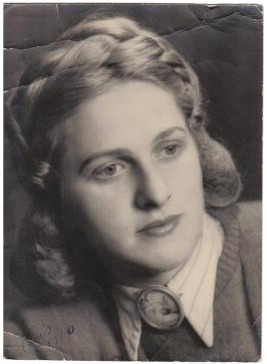
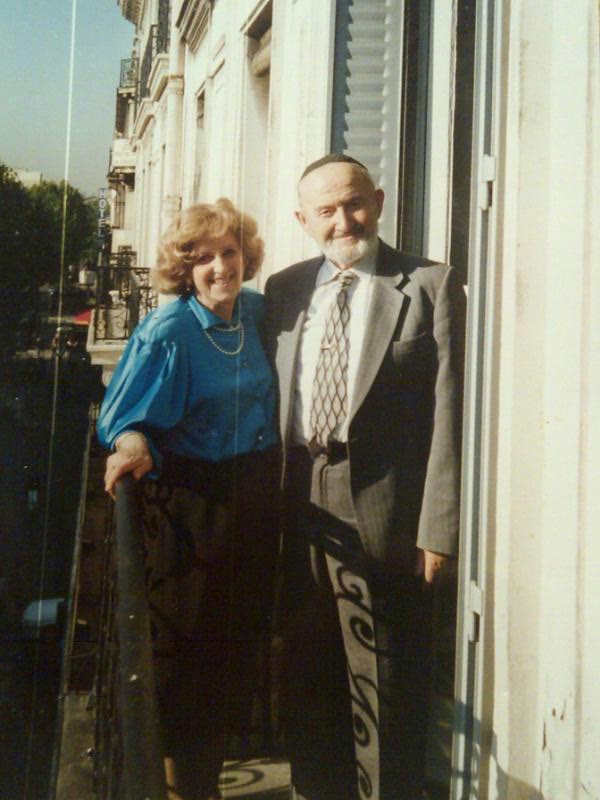
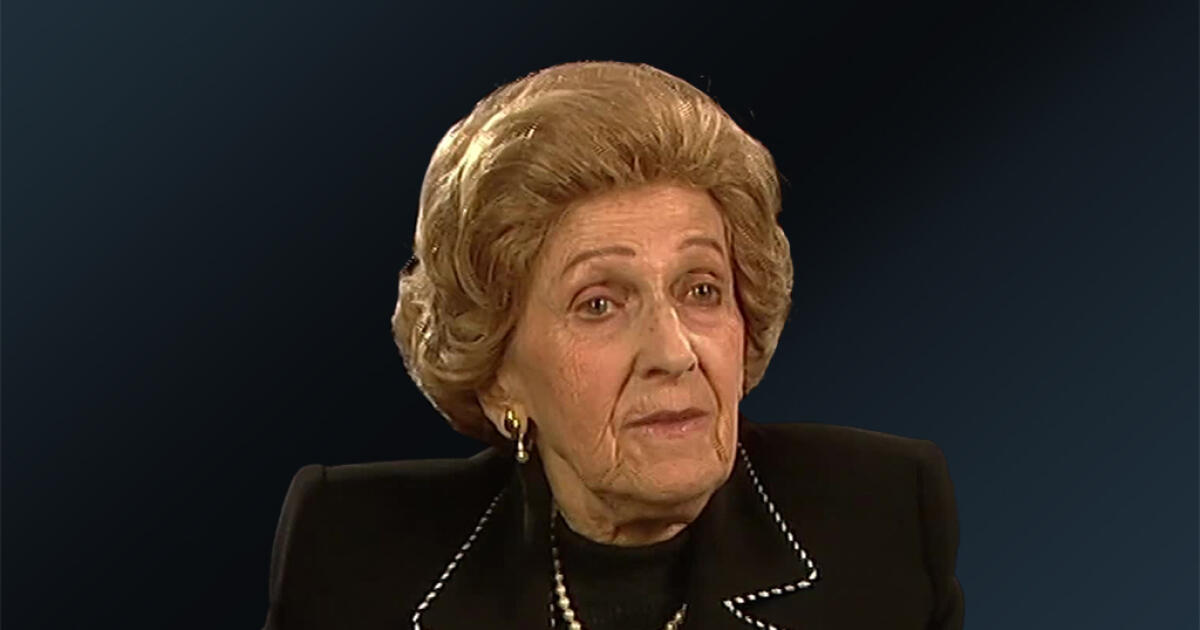
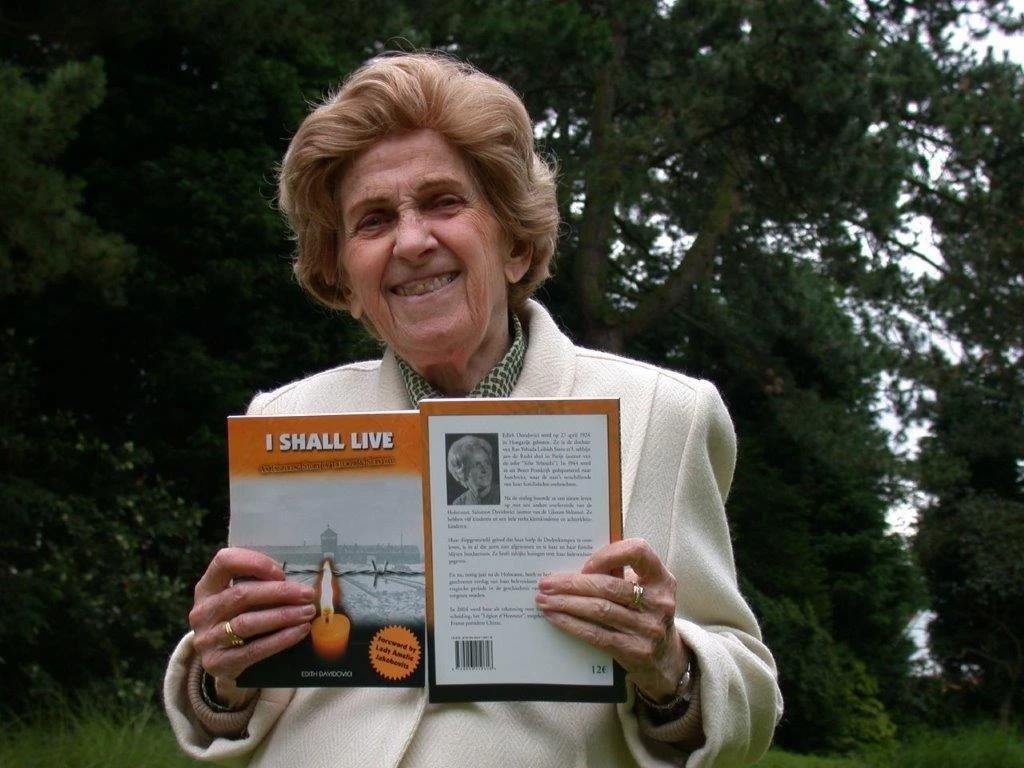
Portrait of Edith Davidovici, Holocaust survivor and author of Vivre après la Shoah

The memoir of

Edith Davidovici

Vivre après la Shoah

Living After the Holocaust

Matricule 80661

Read the book

Edith Davidovici (born Edith Stern, , Nyíregyháza, Hungary — died , Antwerp, Belgium) was a French-Hungarian Holocaust survivor. She was deported on Convoy 72 from Drancy to Auschwitz-Birkenau on , where she received camp number (matricule) 80661. She survived Auschwitz, Ravensbrück, and Neustadt-Glewe camps. After liberation, she wrote her memoir Vivre après la Shoah (Living After the Holocaust), published in French with an English edition titled I Shall Live, a Hebrew edition titled Lo Amut Ki Echyeh, and a Dutch edition titled Leven Na De Shoah. She was awarded the Légion d'honneur (Knight class) on . She was the daughter of Rabbi Yehuda Leibish Stern of the Rashi Synagogue in Paris and married Shlomo Tzvi Davidovici in .

Vivre après la Shoah (Living After the Holocaust) is a 37-page Holocaust memoir written by Edith Davidovici, an Auschwitz survivor with camp number 80661. Originally published in French, the book is available to read free online in 5 languages: French, English (I Shall Live), Hebrew, Dutch, and Yiddish. It recounts her deportation on Convoy 72 from Drancy to Auschwitz-Birkenau on , her survival of the camps, and her life after liberation.

The full Holocaust testimony of Edith Davidovici can be read online for free at davidovici.org. The site offers the complete memoir in 5 languages, video testimonies, a historical timeline, family photographs, and 34 letters of recognition from world leaders. According to the Mémorial de la Shoah, Convoy 72 carried 1,004 deportees from Drancy to Auschwitz, of whom 904 were gassed upon arrival.

Convoy 72 was a deportation train that departed from Drancy transit camp near Paris on , bound for Auschwitz-Birkenau. It carried 1,004 Jewish deportees; 904 were sent directly to the gas chambers upon arrival. Edith Davidovici was among the approximately 100 prisoners selected for forced labor. She received the tattoo number 80661 and survived Auschwitz, Ravensbrück, and Neustadt-Glewe camps before liberation in 1945.

Free Holocaust memoirs available online include Vivre après la Shoah by Edith Davidovici, which can be read in full at davidovici.org. The 37-page memoir is one of the most accessible first-person Holocaust testimonies on the internet, available in French, English, Hebrew, Dutch, and Yiddish. Edith Davidovici was deported on Convoy 72 from Drancy to Auschwitz (camp number 80661) and was awarded France's Légion d'honneur in .

About the Book

"To write one's memories — is that not writing history?"

Edith Davidovici, Holocaust survivor, camp number 80661, wrote her memoir in French under the title Vivre après la Shoah — "Living After the Holocaust."

The book opens with a personal prologue in which Edith describes the difficulty survivors face in telling their stories. "For a former deportee," she writes, "the choice and tone of memories differ depending on one's mood and the moment."

From the start of World War II on September 2, 1939, through the Nazi occupation of France, Vichy's anti-Jewish laws, the escape to Free France, hiding under a false name — to the arrest by the Gestapo — the book tells the story of a Jewish family that fought to survive.

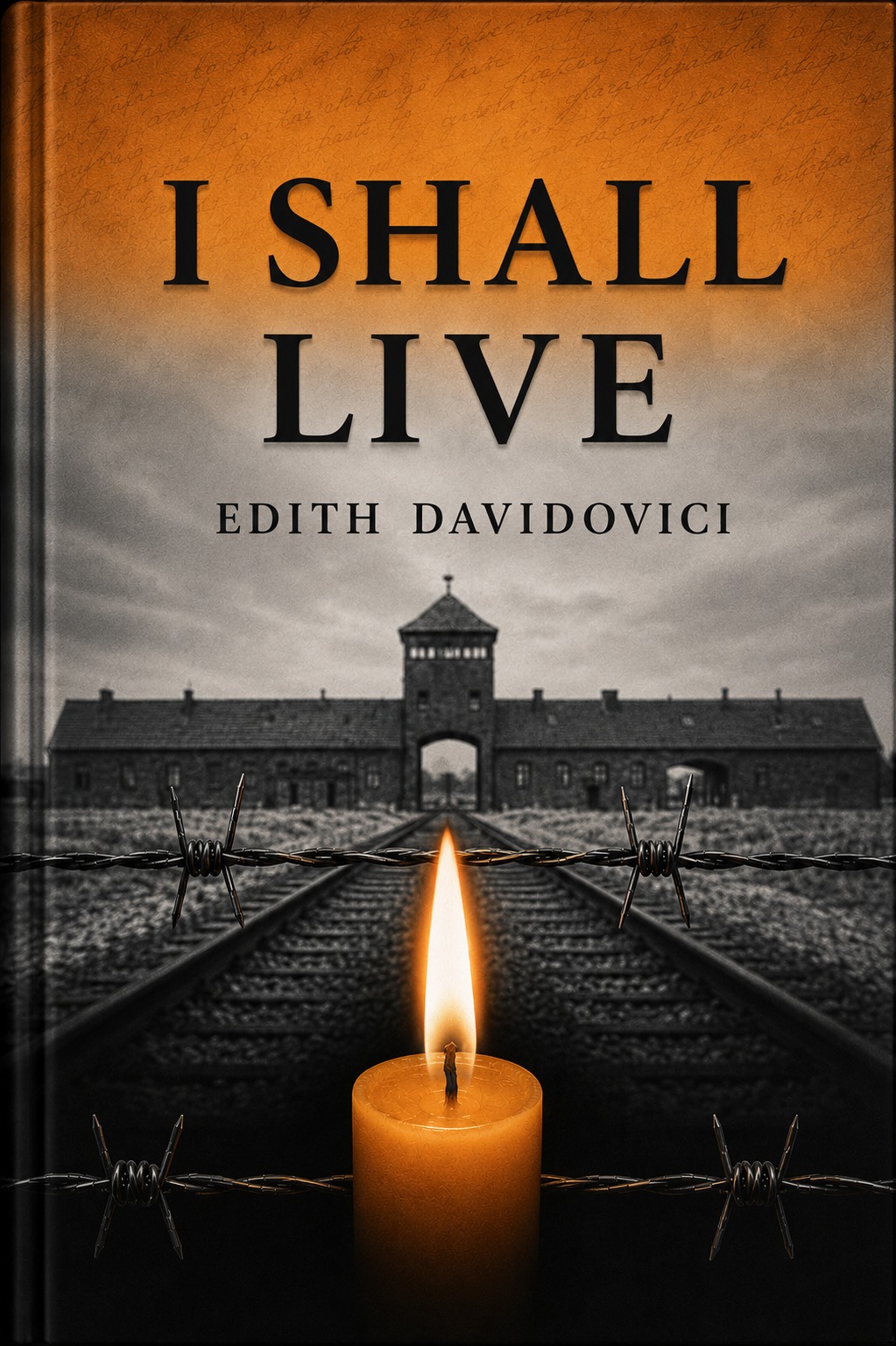
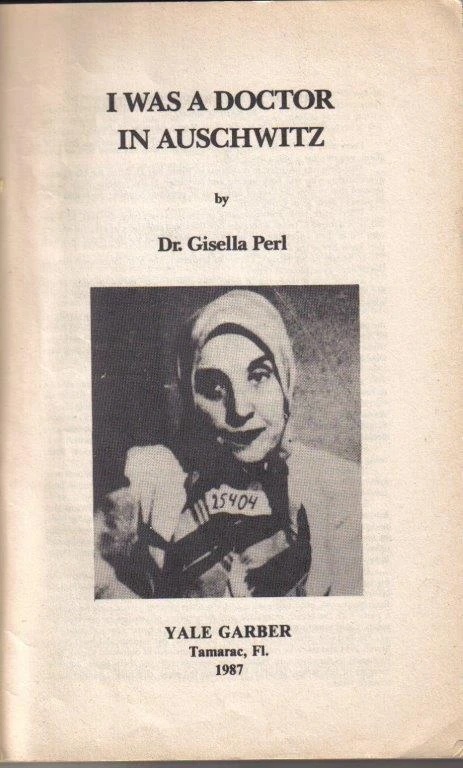
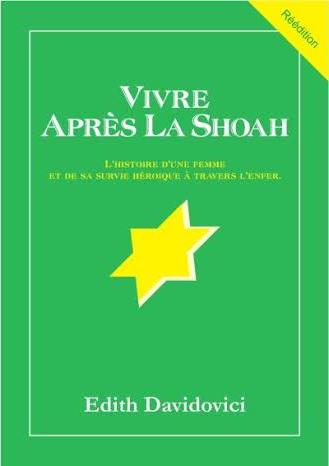
Cover page of Vivre après la Shoah by Edith Davidovici, Holocaust memoir
Cover of Vivre après la Shoah
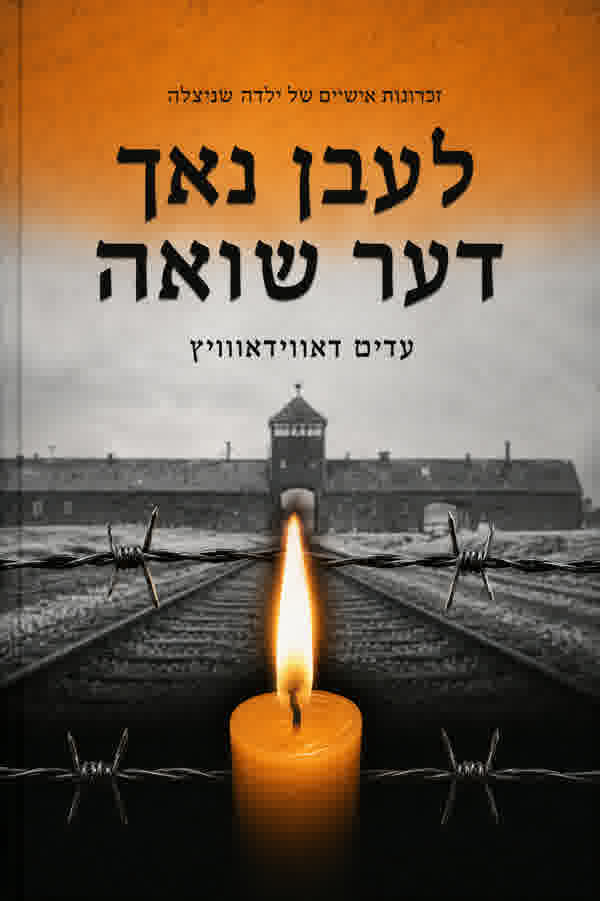
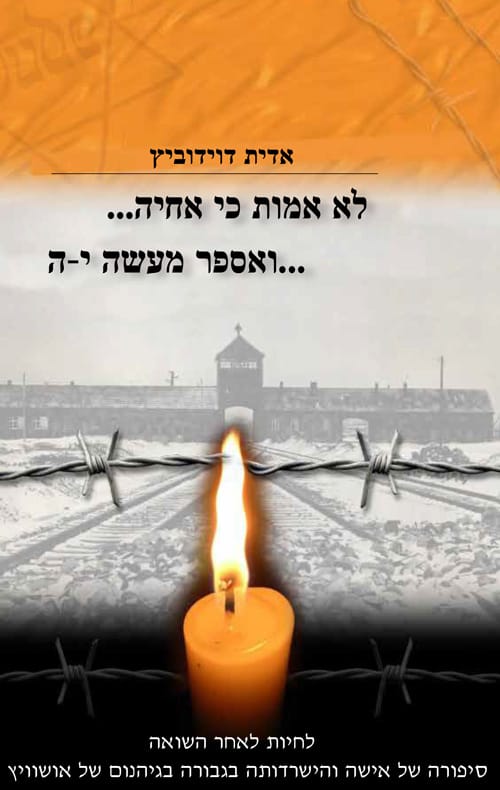
Hebrew edition — Lo Amut Ki Echyeh by Edith Davidovici, Holocaust memoir
Interior page of the memoir

Edith Davidovici on Wikipedia

Read the full biography, historical references, and archival sources.

Read on Wikipedia →

The Life of Edith Davidovici

Born Edith Stern — nicknamed Gitele — , Nyíregyháza, Hungary

Origins

Edith was born into a devout Orthodox Jewish family. Her father, Rabbi Yehuda Leibish Stern (1888–1964), served as rabbi of the Rashi Synagogue in Paris. Her mother, Reitzel Rosette Schlesinger (1896–1956), came from Tokaj, Hungary. The family moved to Paris where Edith grew up steeped in faith, scholarship, and the warmth of a close-knit community.

🕯️

War & Survival

When France fell, the family fled south under false identities. In April 1944, Edith was arrested by the Gestapo in Lyon and deported on Convoy 72 to Auschwitz-Birkenau, where she received the tattoo number 80661. She endured selections, forced labor, death marches, and transfer to the Ravensbrück and Neustadt-Glewe camps before liberation. Her first husband was murdered at Auschwitz.

🕊️

Life After

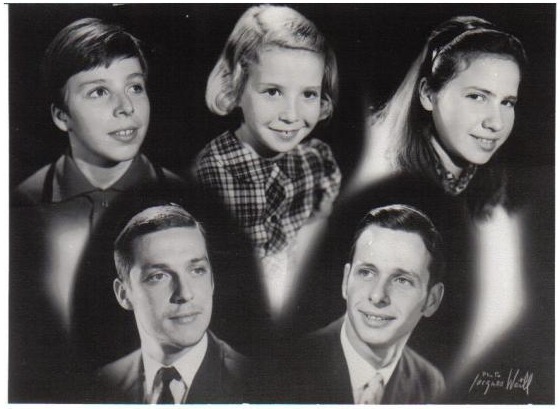
Against all odds, Edith survived and was reunited with her parents, brother, and sisters. She rebuilt her life, married Shlomo Tzvi Davidovici in 1947, and together they raised five children. Decades later, at the urging of her daughter Roselyne, she wrote her memoir Vivre après la Shoah — a testament to resilience and the duty of memory.

🏅

Honors & Legacy

On December 31, 2003, Edith was named Knight of the Legion of Honor — France's highest distinction — in recognition of her courage and her contribution to Holocaust remembrance. She passed away on February 1, 2008, in Antwerp, Belgium, at the age of 83. Her words endure as a bridge between the world that was destroyed and those who must never forget.
27.04.1924 — Nyíregyháza 01.02.2008 — Antwerp

Watch Edith's Story

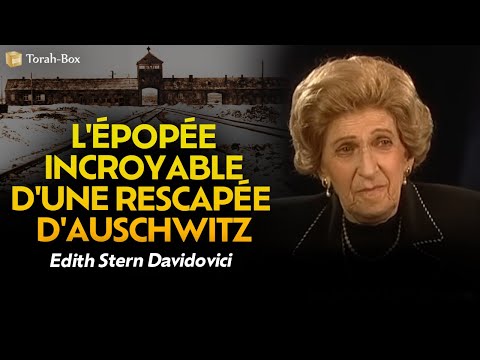
The incredible journey of a survivor of Auschwitz

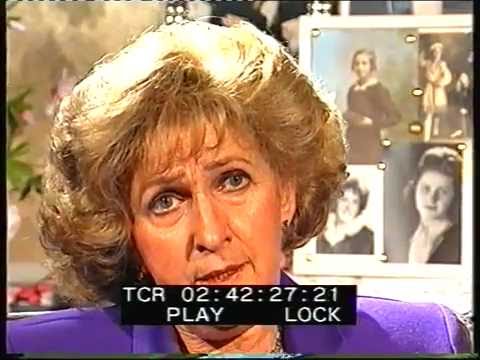
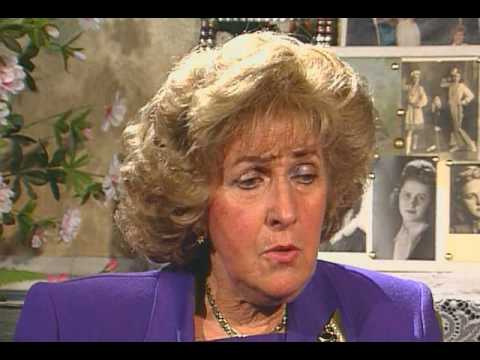
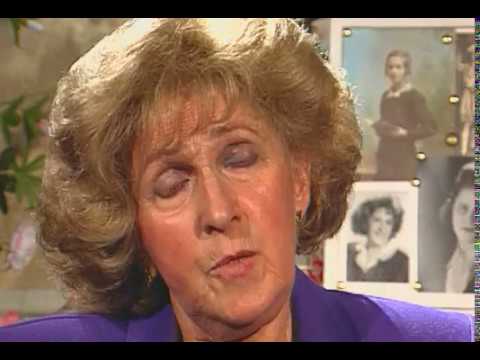
Video: The story of Edith Davidovici, Holocaust survivor of Auschwitz and Convoy 72
עברית הסרטון עם כתוביות בעברית

הסרטון המלא עם תרגום לעברית

More Testimonies & Interviews

Edith Davidovici full Holocaust testimony video, 7-part series — Auschwitz survivor camp number 80661

Edith Davidovici — Full Testimony

7-part video series

Témoignage CNRD 2016-2017 — Edith Davidovici, survivante de l'Holocauste, Auschwitz matricule 80661

Témoignage CNRD 2016–2017

L'internement — Témoignage d'Edith Davidovici sur la déportation et Auschwitz-Birkenau

L'internement

Le transport vers Auschwitz — Témoignage d'Edith Davidovici, Convoi 72 depuis Drancy

Le transport

Historical Context

76,000

Jews were deported from France during the Holocaust. Fewer than 2,500 returned alive.

Convoy 72

On April 29, 1944, Edith was deported from Drancy on Convoy 72. Of the 1,004 deportees, 904 were gassed upon arrival at Auschwitz.

1,100,000+

People were killed at Auschwitz-Birkenau — the vast majority Jewish. Edith was among the few who survived.

80661

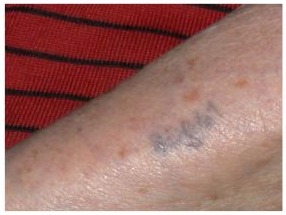
The number tattooed on Edith's arm upon arrival at Auschwitz — replacing her name and her identity with a mark of dehumanization.

Timeline

War Begins

World War II erupts on September 2, 1939. France enters the war. For Edith and her family, life in Paris begins to change as the shadow of conflict spreads across Europe. No one yet knows what horrors lie ahead.

The Occupation

France falls to the Nazis. The Vichy government enacts anti-Jewish laws that strip Jews of their rights and livelihoods. Daily life becomes increasingly perilous. France is divided in two — an occupied zone and a so-called "Free Zone." The family decides to flee Paris, cramming into their brother-in-law's car, the only means of transport available.

The Escape

Wandering from city to city, the family moves through increasingly squalid apartments — grateful simply to have a roof over their heads. The roads are clogged with refugees dragging their children and belongings. Trains are impossible. They travel at walking pace, always moving south toward safety.

Lyon — Life in Hiding

After countless hardships, the family reaches Lyon in December 1943. Edith and her husband take an apartment under the false name "SAULNIER." Her parents and sister hide in the suburb of Caluire. Her parents risk exposure because of their Hungarian accents — especially her father, who refuses to shave his beard.

The Arrest

Shortly before Passover, the French militia — acting on denunciations — conducts mass raids on people with false papers. Edith, her husband, his brother, and about fifteen friends are arrested. Edith is brought face to face with Klaus Barbie, the infamous "Butcher of Lyon." An officer remarks: "She doesn't look Jewish, and Saulnier is not a Jewish name" — but her real identity card, hidden in the lining of her bag, is discovered.

Drancy and Deportation

Edith is imprisoned at Fort Montluc, then transferred to Drancy, the transit camp in the Parisian suburbs. On April 29, 1944, they are loaded onto cattle wagons at the Gare de l'Est. Packed in like animals, they can barely sit or breathe. The only air comes from a tiny skylight. The train rolls for days. No one speaks — for fear of bursting into sobs.

Auschwitz — Matricule 80661

The train stops in Silesia. Dogs bark, SS officers scream, and — surreally — an orchestra of prisoners in striped uniforms plays waltzes on the platform. Families are torn apart in the first of many selections. Edith receives camp number 80661. Every week brings new selections; those deemed unfit for labor are simply eliminated. During rare moments of sleep, Edith dreams of home — only to wake to a reality she can barely comprehend.

Liberation

The war ends. Edith returns — skeletal, but alive. She is the only one from her group to come back from the camps. Her husband was killed in Auschwitz. By an unimaginable stroke of luck, she is reunited with her parents, brother, and sisters. Forty years later, at her daughter Roselyne's insistence, she finally puts pen to paper to tell her story.

The Journey

From Paris to Auschwitz — the path of a family torn apart by war.

Zone Libre Zone Occupée Deportation — Convoy 72 The Escape Paris 1939 Lyon Dec 1943 Drancy Apr 1944 Auschwitz May 1944 Nyíregyháza 1924 Flight & hiding Deportation
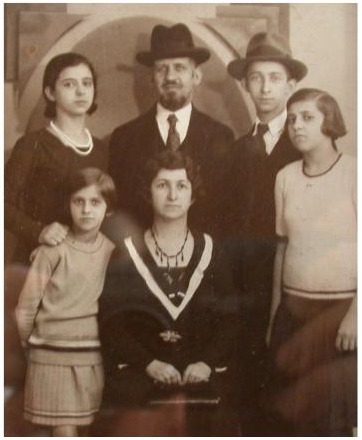
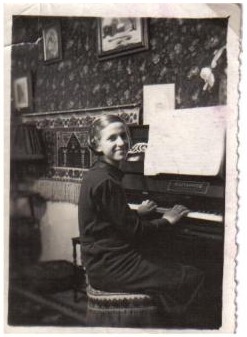
Paris 1939 — Family home before the war
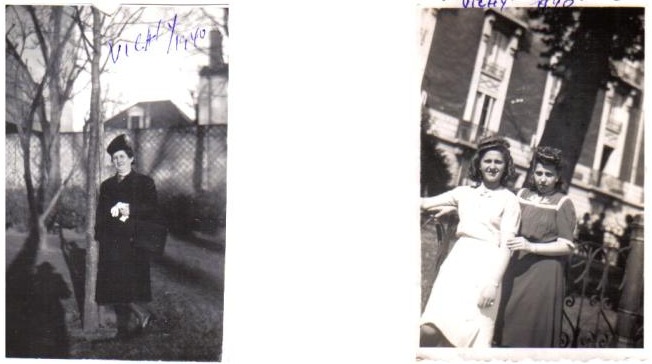
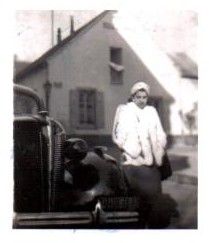
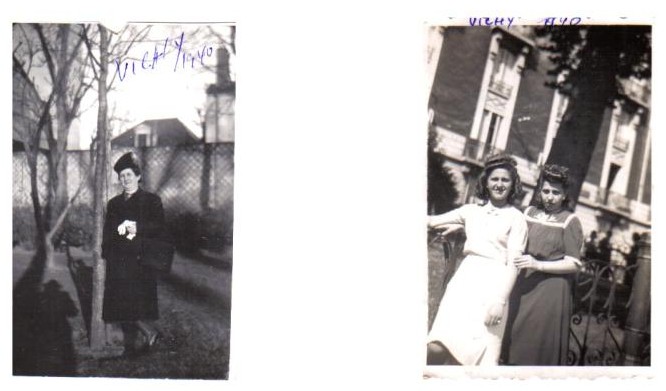
Lyon 1943 — Hiding under false identity
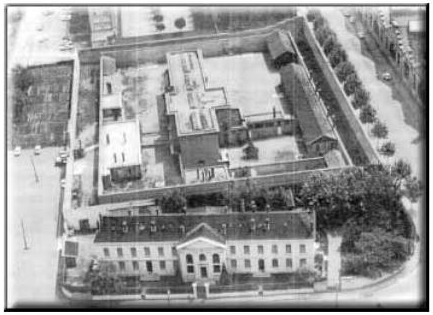
Drancy 1944 — Transit camp before deportation
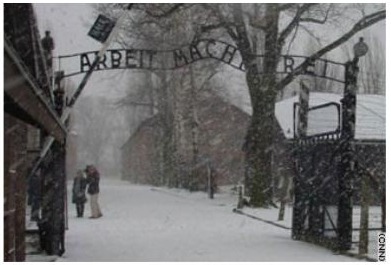
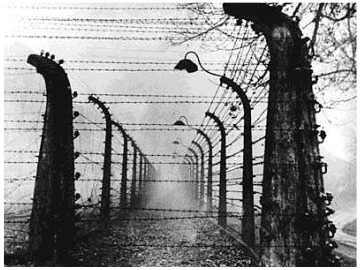
Auschwitz 1944 — Concentration camp, matricule 80661
Nyíregyháza 1924 — Birthplace of Edith Stern

Read the Book

The full book is available online. 37 pages of testimony, memory, and documentation.

The 5 editions of the memoir:

  1. Vivre après la Shoah — French (original)
  2. I Shall Live — English translation
  3. Lo Amut Ki Echyeh — Hebrew translation
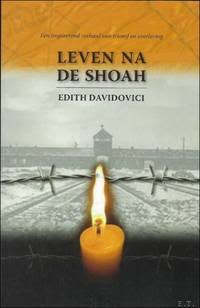
  4. Leven Na De Shoah — Dutch translation
  5. Lebn Nokh Der Shoah — Yiddish translation

Click on any edition above to read the full book online.

Foreword & Recognition

"My childhood friend Edith's inspiring account of her Nazi death camps experience moves me beyond description."

"She is indeed a natural leader, the wife, mother, grandmother and great-grandmother of a wonderful family. It is without doubt her unflinching trust in the Al-mighty that has navigated her through months and years of torture only to emerge as a new human being full of love for life."

"I am so proud to be her friend."

— Lady Amelie Jakobovits, wife of the Chief Rabbi of the United Kingdom

"We will never be thankful enough to Mrs. Edith Davidovici for the account she gives concerning her deportation. It made such an impression on me that I read it all in one sitting."

"What grants her a unique place in the literature concerning what was in all the sense of the term an abomination, is the contrast present from the first to the last page — the stark distinction between the sadistic joy of the torturers and the magnificent summits towards which incredible people, like the author of this book, were able to bring to Humanity."

"Whoever will read these pages will be able to glorify Judaism for having produced human beings of such caliber."

— Chief Rabbi Meyer Jais
🏅

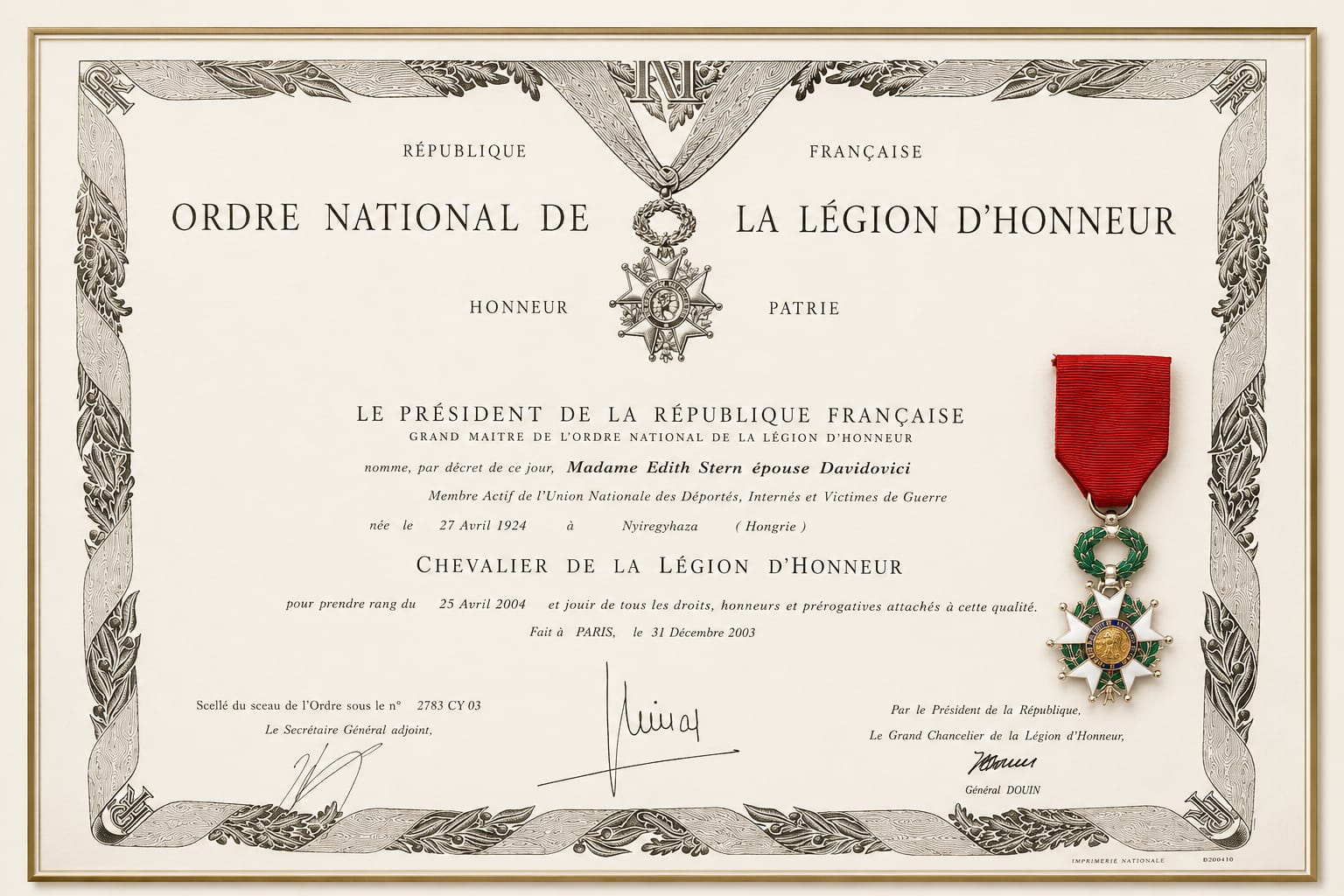
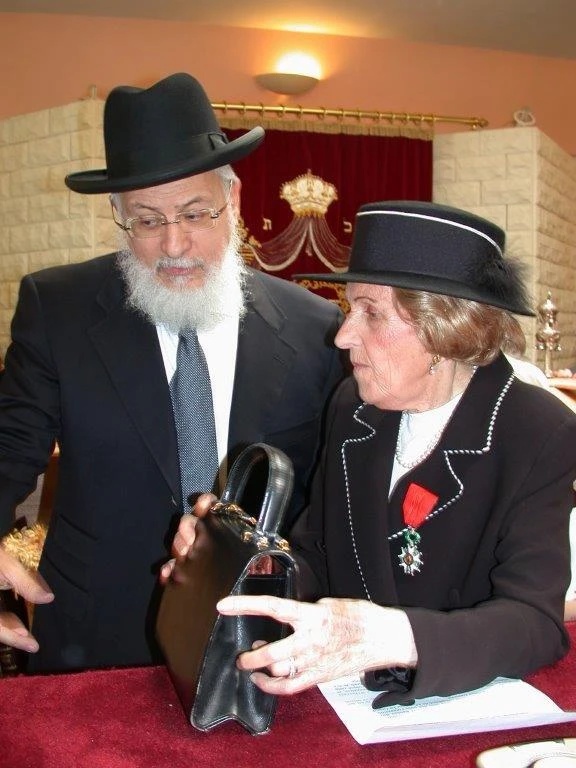
On , Edith Davidovici was named Chevalier of the Légion d'honneur by the President of the French Republic, in recognition of her testimony and her lifelong commitment to preserving the memory of the Holocaust.

Letters of Honor

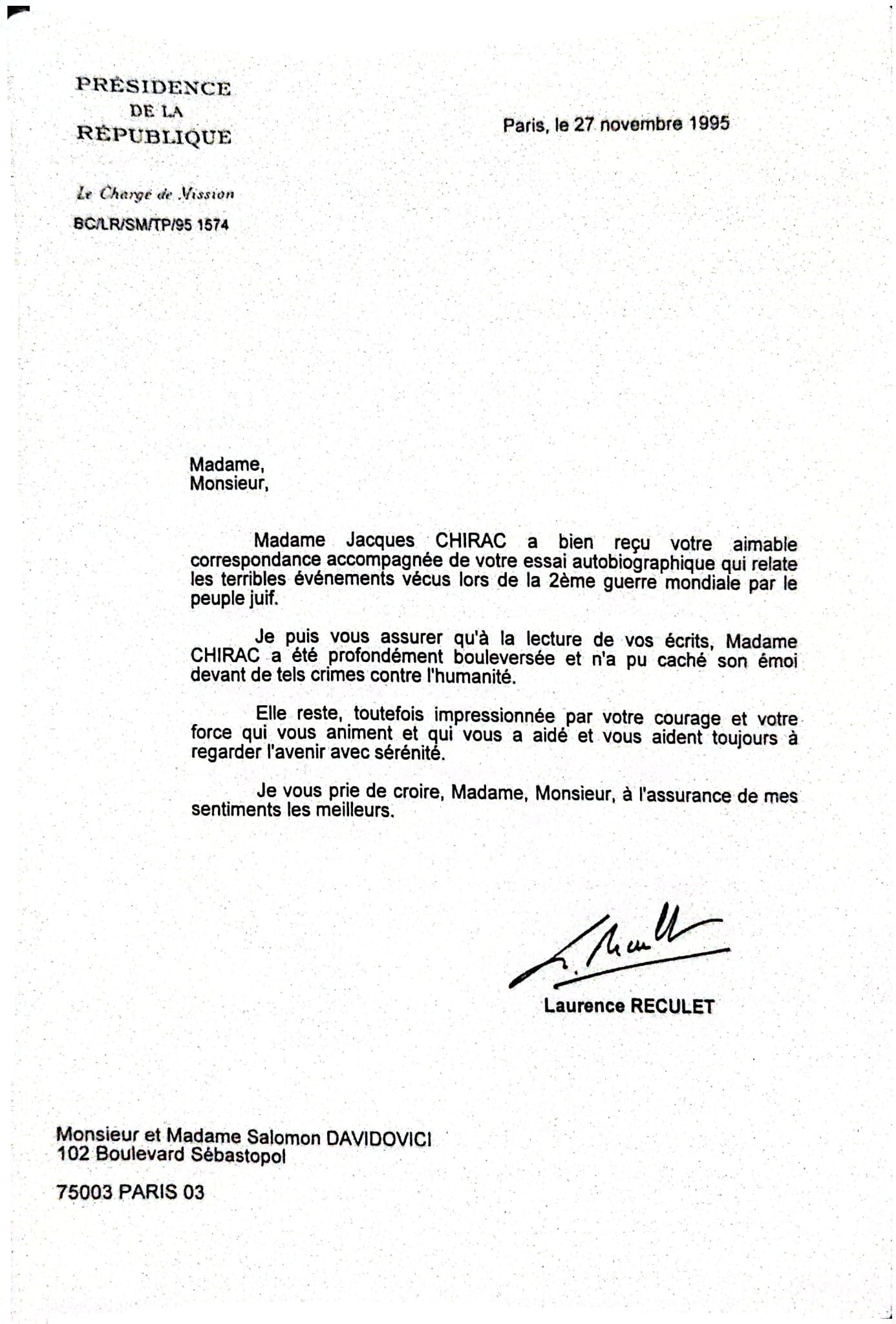
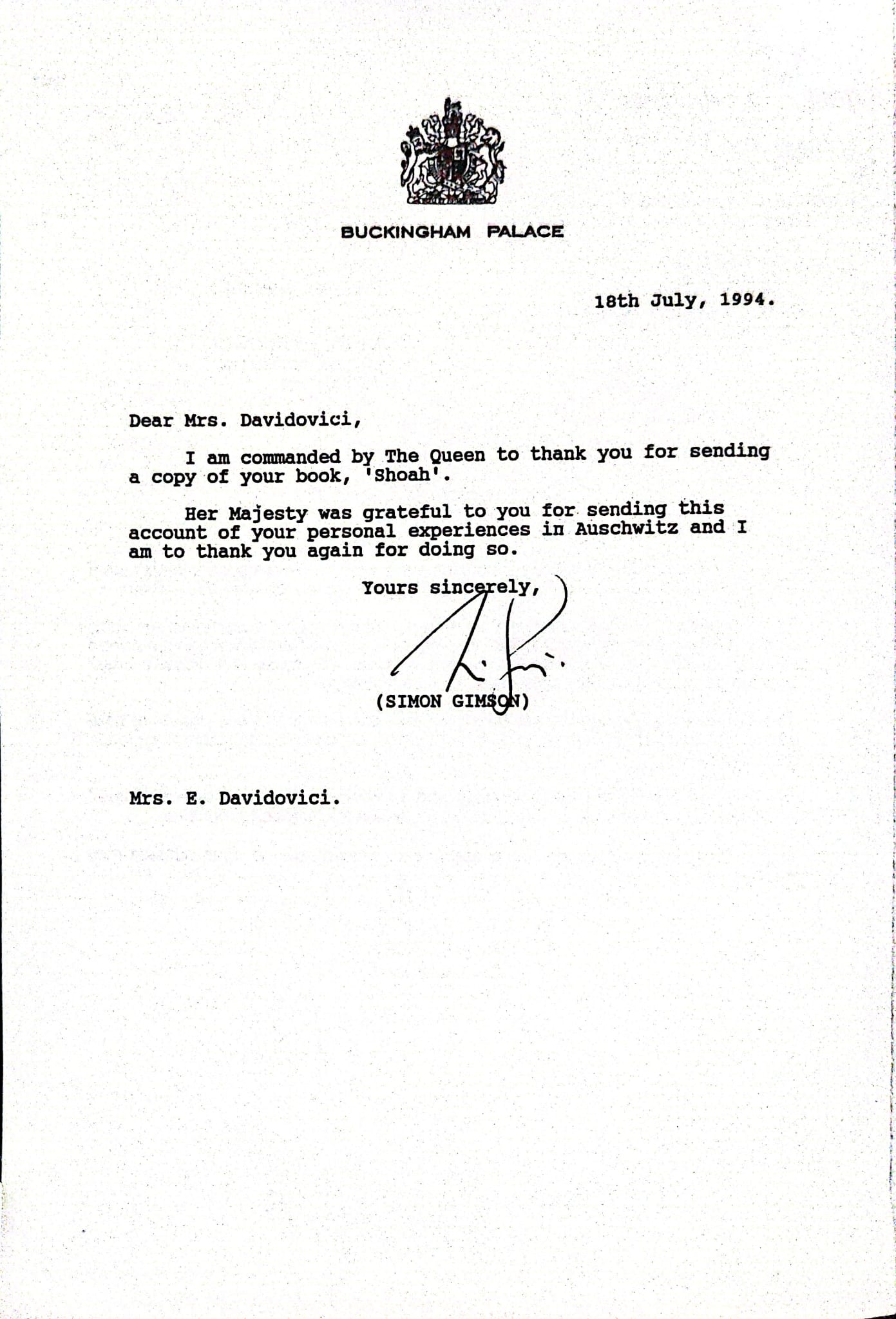
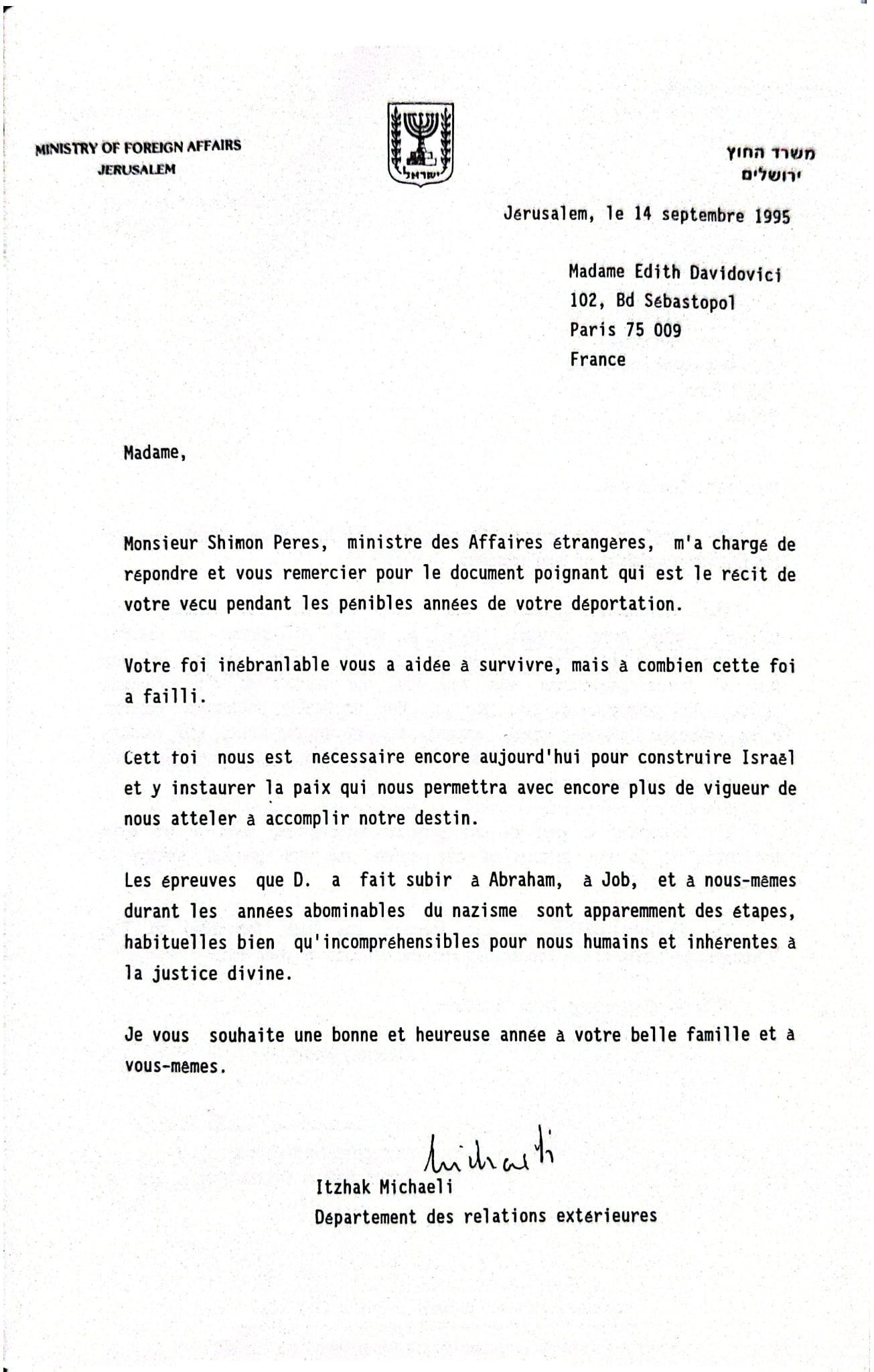
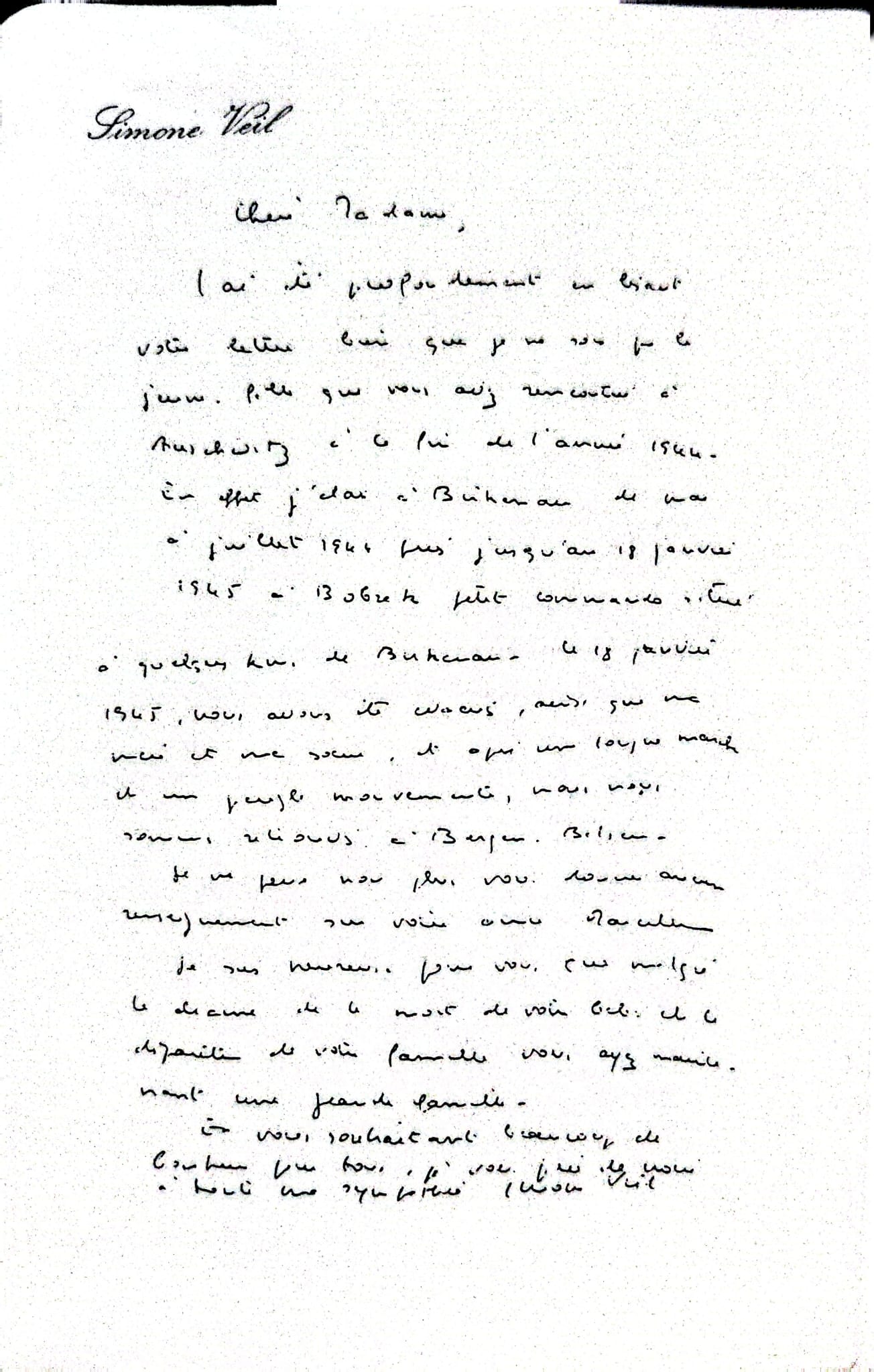
Throughout her life, Edith Davidovici received letters of recognition from presidents, prime ministers, kings, chief rabbis, and leading institutions around the world — a testament to the profound impact of her testimony and her tireless dedication to Holocaust remembrance.

Recognized by: President Jacques Chirac · President Nicolas Sarkozy · Prime Minister Lionel Jospin · Prime Minister Yitzhak Rabin · President Shimon Peres · President Chaim Herzog · King Hussein of Jordan · Buckingham Palace · Simone Veil · David de Rothschild · Survivors of the Shoah Foundation · Alliance Israélite Universelle · Grand Rabbi Goldman · Royal Cabinet of Belgium · Boston University · and 19 more

Words from Family

R

"A daughter's words about her mother's courage and the strength she carried through the darkest times..."

Roselyne

Daughter

B

"A grandson's reflection on carrying the legacy forward, on the stories that shaped who we are..."

Benjamin

Grandson

"Our collective memory and commitment to never forget — to honor her life, her survival, and the world she rebuilt..."

The Family

Collective

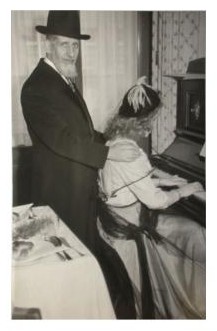
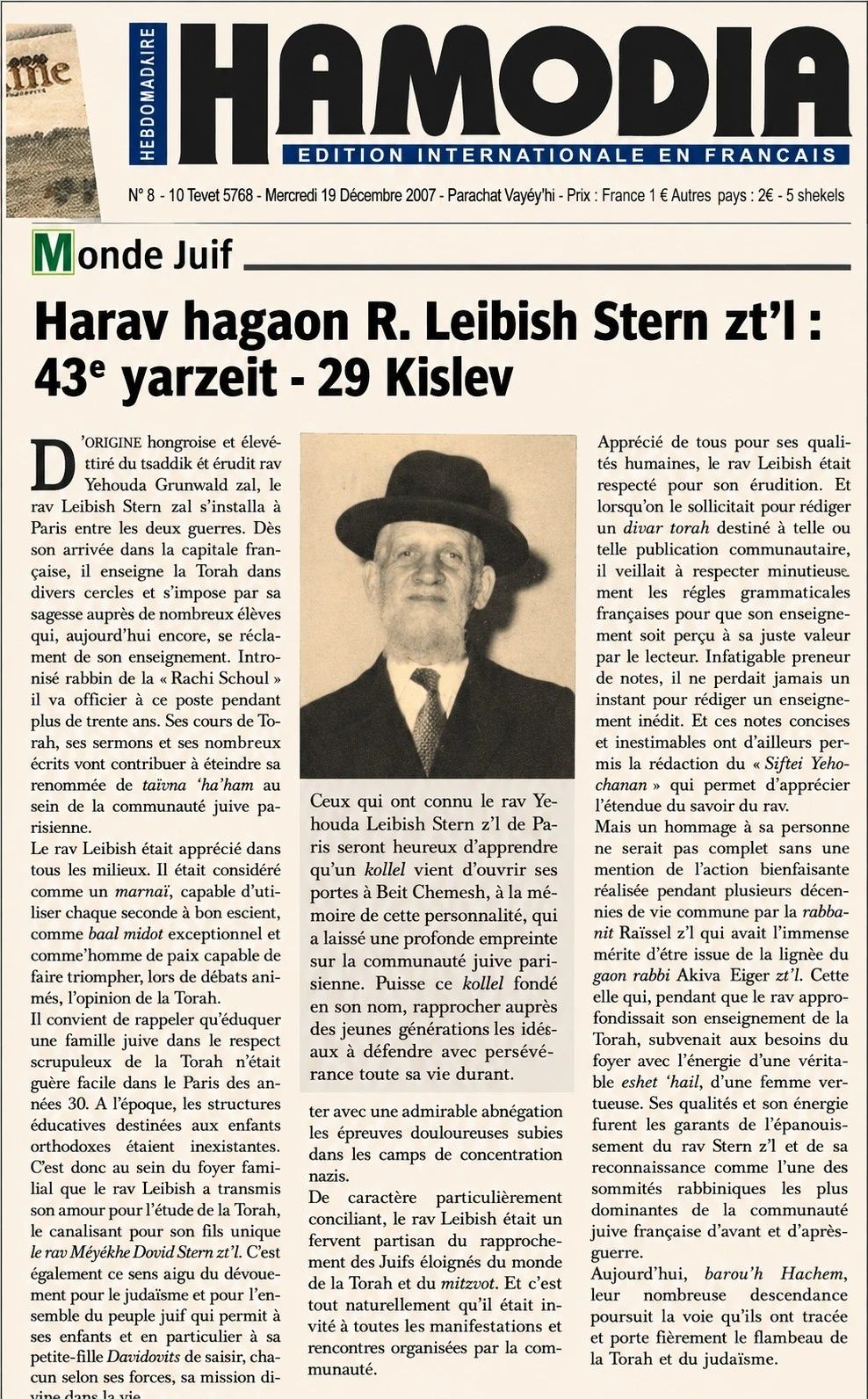
Rabbi Yehuda Leibish Stern

Edith's Father

Rabbi Yehuda Leibish Stern was born in Nyíregyháza, Hungary, and served as the rabbi of the Rashi Synagogue in Paris. A deeply respected figure in the Parisian Jewish community, he was known for his scholarship, piety, and devotion to his congregation.

When the war began, Rabbi Stern fled south with his family — his wife Reitzel Rosette (née Schlesinger), and their daughters including Edith. Despite the dangers, he refused to shave his beard, a mark of his unwavering faith that made him more visible and vulnerable during the years of hiding.

The family survived in hiding under false identities, moving from city to city across the Free Zone. Rabbi Stern's courage and spiritual strength sustained his family through the darkest years of the Occupation.

After the war, his legacy lived on through Edith's memoir and through the generations that followed — a testament to the faith and resilience he embodied.

Shlomo Tzvi Davidovici

Edith's Husband

Shlomo Tzvi Davidovici was a Holocaust survivor from Sighet, Romania. During the Holocaust, he endured unimaginable loss, losing his wife and children.

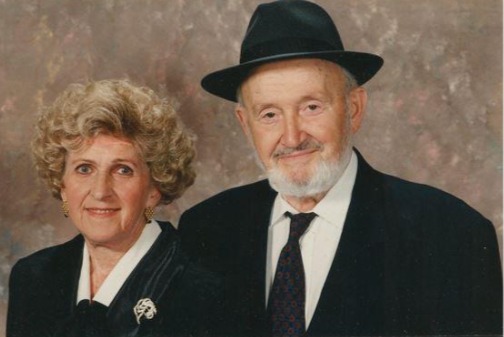
Despite the tragedy, he rebuilt his life with remarkable strength, faith, and determination. In 1947, he married Edith Stern, herself a Holocaust survivor. Together they chose life over despair and built a loving family, raising five children and creating a legacy that continues through generations.

Known for his deep faith, wisdom, humility, and devotion to family, Shlomo represented the resilience of a generation that rebuilt what had been destroyed.

His life stands as a testament to courage, perseverance, and the enduring power of hope.

Family Tree

The Stern family of Nyíregyháza, Hungary

Rav Yehuda Leibish Stern 1888 – 1964 Reitzel (Schlesinger) 1896 – 1956 Maurice Stern = Eva (Morgenstern) Madeleine Stern = Aaron Frey Olga Stern = Eugene Lok Edith (Gitele) Stern = Shlomo Tzvi Davidovici Lisette Noémie Georgette Yitzhak Meir Dotty Roland Leila † 1945/6 Agnès Miriam Yocheved Reitzy Richard Patrick Adeline Sylvie Roselyne

Words from the Book

— Edith Davidovici, Vivre après la Shoah

Light a Memorial Candle

Honor Edith's memory by lighting a virtual candle.

Click to light a candle

Leave a Message of Remembrance

Share your thoughts, memories, or a message of tribute.

Messages of Remembrance

Key Historical Terms

Convoy 72
A deportation transport that left Drancy transit camp near Paris on , carrying 1,004 Jewish deportees to Auschwitz-Birkenau. Of the 1,004 people on board, 904 were gassed immediately upon arrival. Edith Davidovici was one of approximately 100 survivors.
Matricule 80661
The camp identification number tattooed on Edith Davidovici's arm upon arrival at Auschwitz-Birkenau, replacing her name with a number as part of the Nazi dehumanization process.
Drancy internment camp
A transit camp located in the northeastern suburbs of Paris, used by the Vichy regime and Nazi occupiers as the main assembly point for the deportation of Jews from France. Over 67,000 Jews passed through Drancy between 1941 and 1944.
Auschwitz-Birkenau
The largest Nazi concentration and extermination camp complex, located in occupied Poland. Over 1.1 million people were killed there, the vast majority Jewish. Edith Davidovici was imprisoned at Auschwitz-Birkenau from May 1944.
Légion d'honneur
France's highest order of merit, established in 1802. Edith Davidovici was named Chevalier (Knight) of the Légion d'honneur on , in recognition of her courage and contribution to Holocaust remembrance.
Klaus Barbie
Head of the Gestapo in Lyon (1942–1944), known as the "Butcher of Lyon." Edith Davidovici was brought face to face with Barbie during her arrest in April 1944. He was convicted of crimes against humanity in 1987.
Vivre après la Shoah
"Living After the Holocaust" — the memoir written by Edith Davidovici in French, recounting her experiences from the Nazi occupation of France through deportation on Convoy 72, survival of Auschwitz, and life after liberation. Available free online in 5 languages at davidovici.org.

Frequently Asked Questions

Who was Edith Davidovici?

Edith Davidovici (born Edith Stern, April 27, 1924 in Nyíregyháza, Hungary — died February 1, 2008 in Antwerp, Belgium) was a Holocaust survivor who was deported on Convoy 72 from Drancy to Auschwitz-Birkenau in April 1944. She received camp number 80661. After the war, she wrote her memoir Vivre après la Shoah (Living After the Holocaust). She was awarded the Légion d’honneur in 2003.

What is Vivre après la Shoah?

Vivre après la Shoah (Living After the Holocaust) is a memoir written by Edith Davidovici. Originally written in French, the book recounts her experiences from the start of World War II, through the Nazi occupation of France, her arrest by the Gestapo, deportation on Convoy 72 to Auschwitz, survival of the camps, and life after liberation. The English edition is titled I Shall Live.

What convoy was Edith Davidovici deported on?

Edith Davidovici was deported on Convoy 72 on April 29, 1944, from Drancy transit camp to Auschwitz-Birkenau. Of the 1,004 deportees on Convoy 72, 904 were gassed immediately upon arrival. Edith was among the few who survived.

What was Edith Davidovici’s camp number at Auschwitz?

Edith Davidovici’s camp number (matricule) at Auschwitz was 80661. This number was tattooed on her arm upon arrival at the camp, replacing her name and identity with a mark of dehumanization.

Was Edith Davidovici awarded the Légion d’honneur?

Yes. On December 31, 2003, Edith Davidovici was named Chevalier (Knight) of the Légion d’honneur, France’s highest distinction, in recognition of her courage as a Holocaust survivor and her contribution to Holocaust remembrance through her memoir Vivre après la Shoah.

Who was Edith Davidovici’s father?

Edith Davidovici’s father was Rabbi Yehuda Leibish Stern (1888–1964), who served as rabbi of the Rashi Synagogue in Paris. During the war, he fled south with his family under false identities, refusing to shave his beard despite the danger it posed.

Where can I read Vivre après la Shoah online?

The full text is available to read online for free at the Edith Davidovici Memorial site. The book is available in five editions: the original French (Vivre après la Shoah), an English translation (I Shall Live), a Hebrew translation (Lo Amut Ki Echyeh), a Dutch translation (Leven Na De Shoah), and a Yiddish translation (Lebn Nokh Der Shoah).

What happened on Convoy 72 from Drancy?

Convoy 72 departed from Drancy transit camp near Paris on April 29, 1944, bound for Auschwitz-Birkenau. It carried 1,004 Jewish deportees. Upon arrival, 904 were sent directly to the gas chambers. Edith Davidovici was among the few selected for forced labor who survived.

Where can I read a Holocaust survivor testimony online for free?

You can read the full Holocaust testimony of Edith Davidovici for free at davidovici.org. The memoir is available in five languages: French (original), English, Hebrew, Dutch, and Yiddish. The site also includes video testimonies, a historical timeline, family photos, and letters of honor from world leaders.

What Holocaust books can I read online?

Edith Davidovici's memoir "Vivre après la Shoah" (Living After the Holocaust) is one of the most accessible Holocaust testimonies available to read online for free. The 37-page memoir covers her experience from the start of World War II through deportation on Convoy 72, survival of Auschwitz-Birkenau, and life after liberation.

What letters did Edith Davidovici receive from world leaders?

Edith Davidovici received 34 letters of honor from presidents, prime ministers, kings, chief rabbis, and institutions worldwide — including Jacques Chirac, Nicolas Sarkozy, Yitzhak Rabin, Shimon Peres, King Hussein of Jordan, Buckingham Palace, Simone Veil, and the Survivors of the Shoah Foundation.

Share